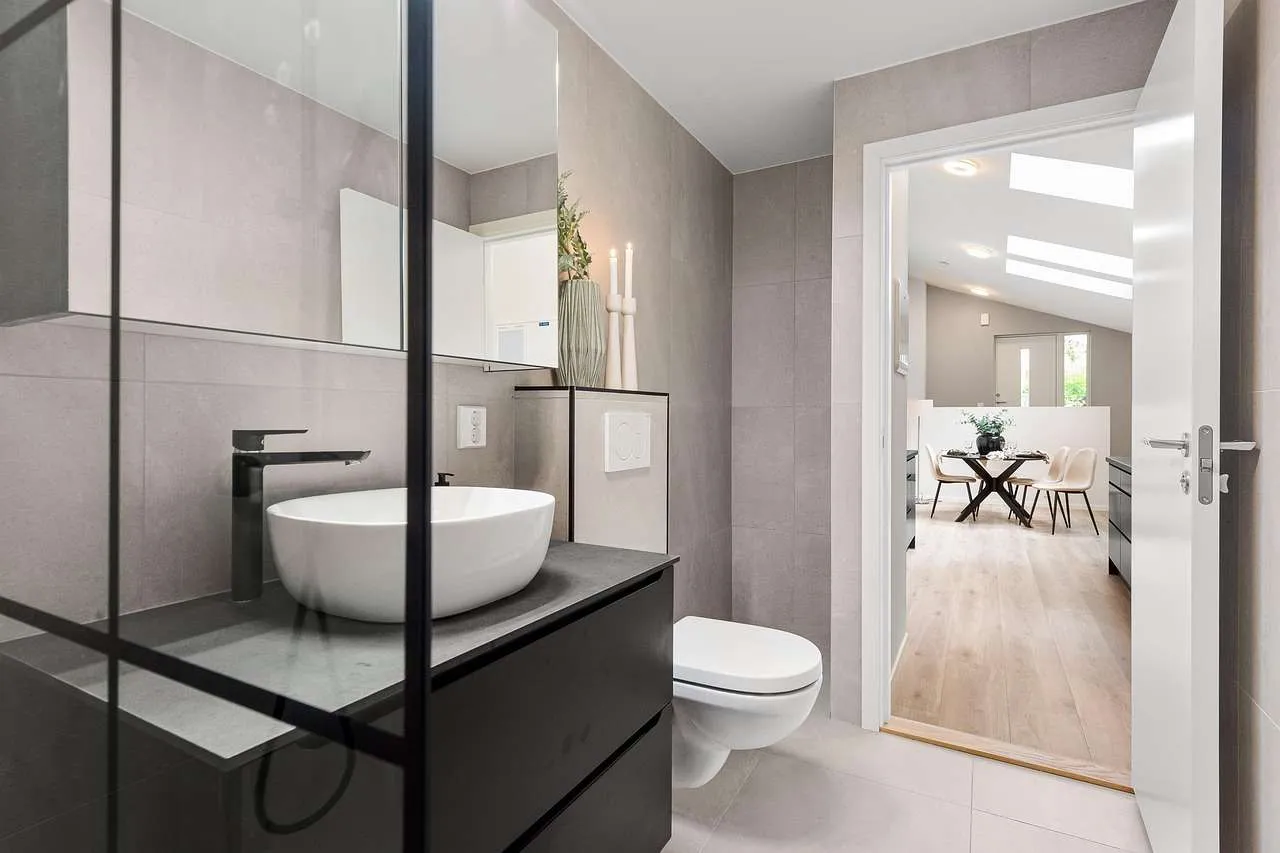
Designing a small bathroom can be challenging, but with the right ideas it can feel larger and more functional. This guide presents small bathroom ideas backed by practical layouts, storage strategies, and lighting principles that work in real homes and budgets.
Smart Layouts for Small Bathrooms
In a compact bath, layout choices determine daily ease. Place the toilet, vanity, and shower along the same wall when possible to minimize wasted space. If doorway clearance is tight, a pocket or barn door can reclaim inches that a swinging door consumes.
Plan around vertical space
Tall cabinets, recessed niches, and wall mounted storage keep the floor clear and create the illusion of height. A wall hung vanity with a slim countertop appears lighter and easier to clean.
Choose open shower design
A walk-in or frameless shower with clear glass visually expands the room and reduces the visual weight of a tub or splash walls. A compact shower curb is enough to contain water without creating visual barriers.
Storage Solutions That Make a Difference
Storage is the backbone of small bathroom design. Built-in niches in the shower, mirrored medicine cabinets, and vanity drawers keep essentials within reach while preserving a clean silhouette.
Vanities and sinks
Opt for a compact wall mounted vanity, and consider a corner sink if the footprint is extremely tight. Floating shelves above the vanity add storage without crowding the floor.
Smart organizers
Use medicine cabinets with integrated lighting, pull-out organizers in drawers, and towel niches beside the shower. Recessed shelving in the shower keeps bottles off the vanity and reduces clutter.
Materials, Colors, and Lighting
Light, neutral colors with reflective surfaces help a room feel open. Large-format tiles reduce grout lines and create a continuous look. Layer lighting with a bright vanity light, soft ambient illumination, and a small ceiling fixture to avoid harsh shadows.
Budget-Friendly Upgrades
Great results don’t require a full remodel. Swap to a space-saving dual-flush toilet, install a frameless shower door, repaint the vanity in a lighter shade, and add a large mirror with integrated LED lighting to amplify brightness.
Comparison of Layout Options
| Option | Pros | Cons | Best For |
|---|---|---|---|
| Walk-in shower with glass doors | Feels open, easy to clean, modern | Potentially higher cost; plumbing constraints | Open feel in small spaces |
| Shower-tub combo | Flexible for families, affordable | Bulkier footprint, less airy | All-in-one solution |
| Pocket door | Gains floor space, no swing | Installation complexity | Narrow doorways |
| Wall-hung toilet and vanity | Clearance underneath; easier cleaning | Higher install cost | Very small or modern baths |
| Frameless enclosure | Seamless look, larger feel | Precise installation required | Contemporary small bathrooms |
In practice, the best solution depends on your layout, plumbing, and budget. A thoughtful combination—such as a pocket door, a frameless shower, and a floating vanity—creates a calmer, more spacious atmosphere while preserving storage and functionality.
Conclusion, effective small bathroom ideas hinge on smart layouts, wall-mounted fixtures, recessed storage, and bright, reflective surfaces. By pairing a walk-in shower, compact vanity, and strategic lighting, you can create a bathroom that feels larger, stays organized, and fits your budget.